Why termite protection should start early
Termites work silently from inside wood and structures. By the time damage is visible, door frames, wooden floors, ceilings, or roof frames are usually already hollow. A humid tropical climate like West Kalimantan suits termites very well. Tearing out and replacing damaged parts almost always costs far more than prevention.
The risks of leaving it
Weakened structure
Hollow roof frames, door frames, and wooden floors can weaken and endanger occupants.
Damaged records and goods
Termites eat paper, cardboard, and wood in warehouses and archive rooms.
Lower property value
Signs of past termite damage reduce a building’s value when it is sold or rented.
Rising repair costs
The longer it is left, the more parts have to be torn out and replaced.
At a glance
| Waiting until damage shows | Protection from the start | |
|---|---|---|
| When action is taken | After the wood is hollow | Before or as termites start to enter |
| Cost | Tear out and replace | Treatment and monitoring |
| Disruption | Renovation, areas closed | Minimal, the building stays in use |
| Certainty | None | Reports and a monitoring schedule |
Termites we handle
Subterranean termites
The biggest cause of building damage. They enter from the soil through gaps in floors and walls.
Drywood termites
Live inside wood without contact with the soil and leave fine pellets behind.
Signs of infestation
- Mud tubes on walls or door frames.
- Discarded wings near windows and lights.
- Wood that sounds hollow when tapped.
- Fine pellets under furniture or frames.
Protection methods
Conventional
Termiticide is applied to the soil to form a protective barrier. In new buildings this is done before the floor slab is poured; in existing buildings, by injection through floors and walls.
Baiting system
Bait stations are placed around or inside the building. Termites carry the bait back to the nest, so the whole colony is eliminated at the source, with no demolition or drilling.
Reticulation system
A network of perforated pipes is laid along the foundation or under the floor. Termiticide is pumped through injection points outside the building, so the barrier can be renewed regularly without breaking up the floor.
Wood treatment
Wood is treated with a preservative or termiticide by brushing, spraying, or injection. It protects door frames, roof frames, and wooden furniture, including from drywood termites that do not come from the soil.
Conventional method: pre- and post-construction
Pre-construction
Carried out after the ground is levelled and compacted, before the floor slab is poured. Termiticide is sprayed evenly over the soil under the floor, the foundation trenches, and around pipes that pass through the floor. The result is a continuous barrier under the whole building, following SNI 2404:2015.
Post-construction
For existing buildings. Holes are drilled at set intervals through floors and walls along vulnerable lines, and termiticide is injected into the soil beneath. The soil around the building is also treated, and the drill holes are neatly sealed afterwards.
Wood treatment
- New timber is treated before installation, so it is protected from the start.
- Installed timber is sprayed or brushed on the surface, and injected where it is already damaged.
- Drywood termites are treated by injecting the infested wood directly, because they live inside the wood and do not come through the soil.
- Most effective when combined with soil protection, so the building is protected both from below and in the wood itself.
How the baiting system works
- Inspection and station placement. In-ground stations are installed around the building; above-ground stations are fixed directly on active termite spots, with no drilling into floors or walls.
- Termites feed on the bait. The bait is cellulose-based, which termites prefer. Stations are sealed, dark, and moist, like termite tunnels.
- The active ingredient works slowly. It stops termites from forming a new skin, so they die when they moult. Because it works slowly, worker termites have time to share the bait with others in the nest.
- Regular inspections. The first inspection takes place a few weeks after installation. Bait is topped up according to consumption until termite activity stops.
- The colony is eliminated. Termites look weak and change colour, then activity stops. A final inspection confirms the building is termite-free, and in-ground stations can stay in place for monitoring.
Advantages of the baiting system
- Eliminates the colony, not just the termites you can see, including nests located away from the building.
- No demolition or drilling, suitable for tiled or marble floors, buildings in operation, and heritage buildings.
- Very little active ingredient, kept inside sealed stations, so it is safe for occupants, children, and pets.
- Clean and odourless, so the building can be used as normal during treatment.
- Measurable results, because bait consumption and termite activity are recorded at every inspection.
Comparing the three soil protection methods
| Conventional | Baiting | Reticulation | |
|---|---|---|---|
| How it works | Chemical barrier in the soil | Bait carried to the nest, colony eliminated | Barrier delivered through buried pipes |
| Best suited for | New and existing buildings | Buildings that cannot be drilled, sensitive areas | New buildings; existing buildings also possible |
| Demolition or drilling | Yes, for existing buildings | No | Only when the pipes are installed |
| Maintenance | Repeated per protection period | Station checks and bait top-ups | Refills through injection points |
What you receive
- Inspection report and points of concern.
- Details of the method and treated areas.
- Monitoring schedule and protection period as quoted.
When to contact us
- You are about to build, before the floor slab is poured.
- You are renovating or extending a building.
- You plan to buy or rent an older building and want it checked first.
- Buildings around you have had termites.
Why choose PT IFI
Pre- and post-construction
Protection for new buildings and buildings already in use.
No-demolition option
A baiting system when drilling the floor is not possible.
Reports and monitoring schedule
Treated areas, methods, and the monitoring schedule are clearly recorded.
The 5T principle
The right dose and method, safe for occupants and the environment.
Regulations and standards
- SNI 2404:2015, the Indonesian standard on termite prevention in the construction of houses and buildings, is the reference for pre-construction treatment.
- The termiticides we use are registered products applied according to their label directions.
- Methods and doses are chosen according to the termite species, soil conditions, and building construction.
Frequently asked questions
Which method suits my building?
We decide after an inspection, considering the construction stage, floor type, level of infestation, and long-term maintenance plans. New buildings are best protected with pre-construction treatment or reticulation; buildings in use that cannot be drilled suit the baiting system.
When is the best time to protect a building?
Before the floor slab is poured during construction. At this stage the soil under the building can be treated evenly, so the barrier is in place from the start.
Can a building already in use still be protected?
Yes, through injection into floors and walls or a baiting system around the building. We choose the method after an inspection.
How long does the protection last?
It depends on the method, site conditions, and the products used. The protection period and monitoring schedule are stated in the quotation.
Planning a construction project? Contact us before the floor is poured. For existing buildings, send photos of termite signs through the quote form.
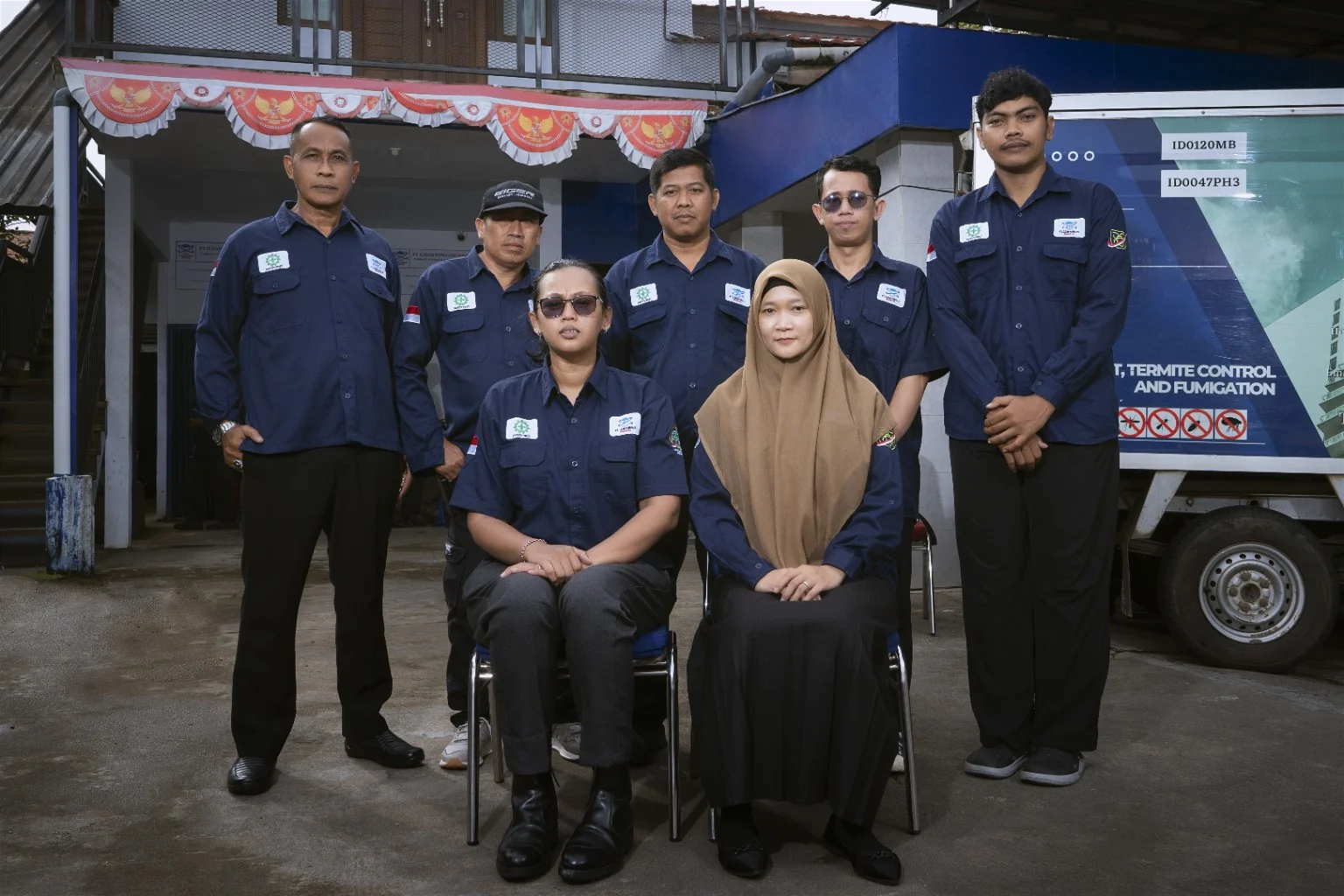
Field documentation